Skip to content
Grade 4Grade 5Grade 6Grade 7

Grade 4, weeks 1–10. Teacher pages and student pages. Print this, or read it on the screen.

COMPASS · GRADE 4 · FIRST YEAR · WEEKS 1–10

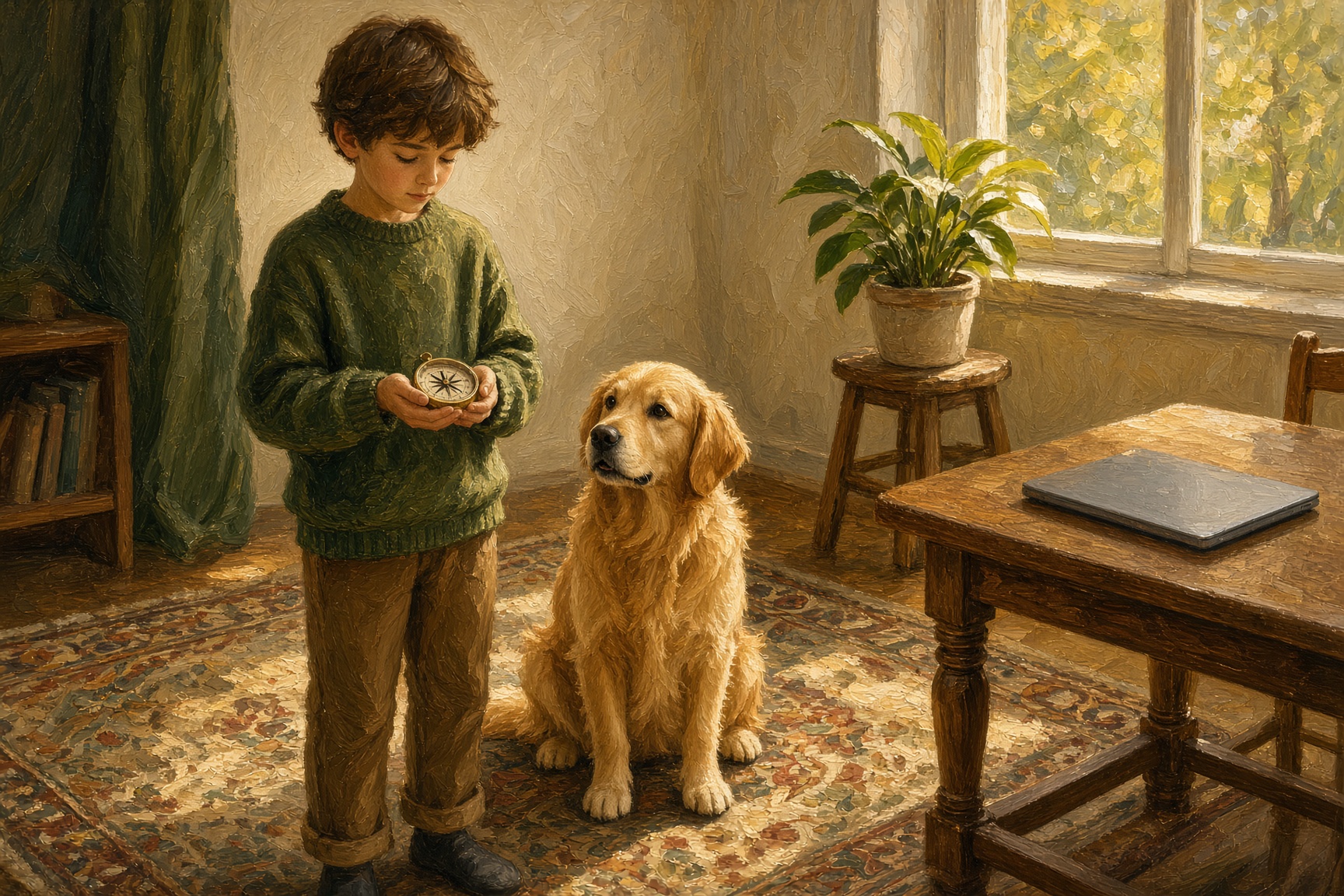
A child looks at a compass beside a dog. A closed laptop and a plant are in the room.

Weeks 1 to 10

People, ordinary tools, and a program that learns from examples.

For ten weeks, students sort living things, ordinary tools, and a chatbot. A chatbot is a computer program that answers in sentences. Then they look at older tools, make a map of what they did with their own minds, and train a small sorting program on examples they chose. They work on paper. They do not open a public chatbot. The brown pages are for students to write on. The green pages are for the teacher to read.

STUDENT PAGES + TEACHER PAGES

Units 1 and 2 · ages 9–10

Notice · remember · choose · care

How to use this booklet

Ten weeks. Keep the order.

Each week has three class periods of about 45 minutes. You can also run two periods of 60 minutes. Do the weeks in order. Week 1 is in the room, with real objects. Week 2 uses paper cards. Weeks 3 to 5 stay on paper. Weeks 6 to 10 use paper first. If the school sorting program is ready, students may use it. If it is not ready, the paper version on these pages is the lesson.

Brown pages are for students. Print them. Children write on them in pencil. Green pages are for you. Read the “Say this out loud” box, then stop talking and walk around while the children work. Do not add a longer speech.

  • Do not open a public chatbot to show them AI. Grade 4 stays in this booklet and, if you have them, the school tools named here.
  • Do not type student names, photos, or home details into any tool.
  • If a child already uses a smart speaker or a chatbot at home, do not single them out. Say: “At home a machine can answer you. In this class we practice telling a machine from a person.”
  • You are not trying to make the class agree. You are trying to get each child to write one clear reason.

How a 45-minute period is split

About 7 minutes at the start: show the object or ask the question. About 30 minutes of children working. About 8 minutes at the end: one clear warning, a short task with phones put away, and one sentence they can say as they walk out.

Compass · Grade 4 · Weeks 1–10 · People, tools, and guesses

Teacher · Week 1 · What kind of smart?

What the children will do this week

Children sort real objects in a classroom while the teacher watches.

Children already call phones, speakers, and thermostats smart. This week you ask them what they mean by that word. A living thing can notice, remember, choose, and care. A pencil cannot care. A chatbot can answer in a kind way and still not care.

  • By Friday, each child can say the four words from memory: notice, remember, choose, and care. They should not need the poster.
  • Each child can point to one object in the room and say whether it is living, a tool, both, or neither, and give one reason about what it can do or cannot do.
  • On Day A, leave the plant on the table as an open question. Do not force the class to pick one answer for it.
  • Day A: put a plant, a book, and a photo of the classroom thermostat on a table. Teach the four words. Sort a pencil and a dog with the class. Do not sort the plant yet.
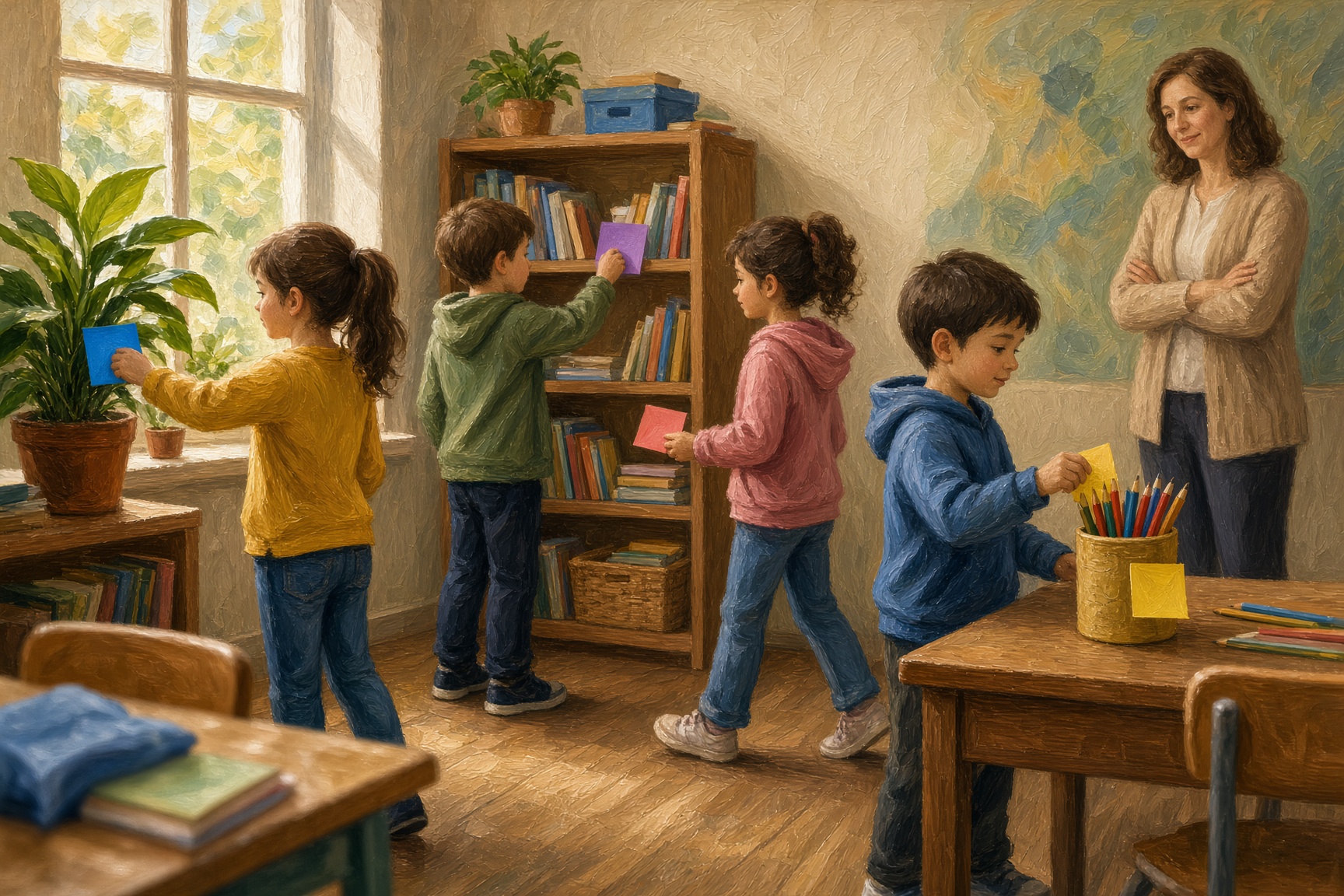
  • Day B: pairs walk the room with four colors of sticky notes. If they cannot agree, the object goes on a wall chart. The hard cases are the plant, the thermostat, the book, and the dog.
  • Day C: add any new reasons to the chart. Children copy one warning sentence. Then collect phones and tablets. Each child draws one real object and writes three sentences about what they see.

If this starts happening

Children start using “smart” as a fifth pile. A child asks to open a chatbot just to check. The class wants to vote so they can finish. Say: “We are writing reasons, not picking a winner. The plant stays on the wall chart.”

Compass · Grade 4 · Weeks 1–10 · People, tools, and guesses

Teacher · Week 1 · Day A · 45 minutes

Start with three objects. Do not give a speech.

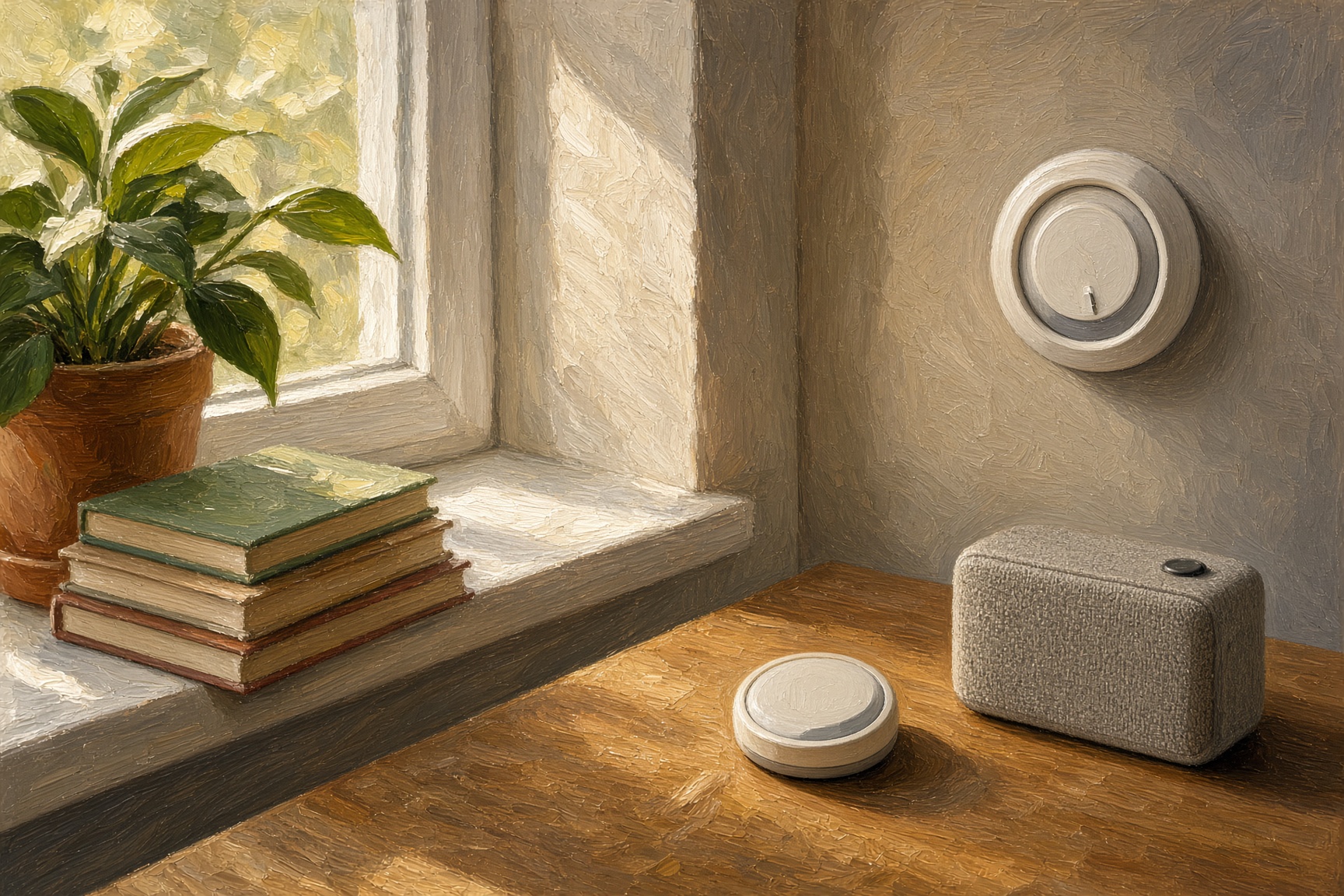
A plant sits in a window. A thermostat and a small speaker are on a desk.
0–8 min

Before they sit, put a plant, a book, and a photo of the classroom thermostat on a table. Point. Ask: “Which of these would you call smart? Why?” Write their exact words on the board. If someone says the thermostat is smart because it knows when it is cold, write that whole sentence. Do not correct it yet.

8–16 min

Give the four words, one at a time. Notice: you pay attention to what is here. Remember: you keep something for later without looking it up. Choose: you could have done something else. Care: it matters to you what happens.

16–28 min

Open the student page about four things a mind does. Each child writes one example from today. “I care about a game” is fine. If the care box is blank, ask: “Who would you miss if they were gone?” Have them write that. Do not let them write a secret or someone else’s private business.

28–38 min

Hold up a pencil. Ask: living, tool, both, or neither? Wait at least five seconds. Most children will say tool. Ask why. Then hold up a photo of a dog. Most will say living. Ask why. Leave the plant on the table. Do not sort it today.

38–45 min

Tell them that tomorrow they walk the room with four sticky colors: living, tool, both, neither. Say the four color names together once. Send them out.

Say this out loud, then stop

Look at these three things. People call some of them smart. I want to know what you mean by that word. A mind can notice, remember, choose, and care. A tool helps a person do a job. A chatbot can answer you without being a person. Tomorrow we will sort things in the room. We will not settle every argument this week.

Compass · Grade 4 · Weeks 1–10 · People, tools, and guesses

Teacher · Week 1 · Day B · 45 minutes

Walk the room. The only question is why.

Give each pair four sticky colors. Write this key on the board before they stand up: living, tool, both, neither. Each pair marks six objects. If they cannot agree, they do not pick a winner. They write the object’s name on a slip and bring it to the wall chart.

0–5 min

Cover the poster of the four words. Ask the class to say notice, remember, choose, and care from memory. If they get stuck, uncover one word at a time.

5–28 min

Pairs walk. You walk too. Do not hover at the pencil. Stand by the thermostat and the plant. If a child says “because it is smart,” say: “Smart is not one of our four piles. Tell me what it can do.”

28–40 min

Sit down. Put four names on the chart: plant, thermostat, book, dog. For each name, take two reasons that disagree. Write both. Do not circle a winner.

40–45 min

Stop while people still have their hands up. Say: “We are not picking one answer today. The wall chart stays up.”

When someone says the book is alive

Let that run for two minutes. Then ask: “Who put the ideas in it?” and “Can the book change its mind tonight?” Write both answers on the chart. Do not pick one.

If this starts happening

A pair copies the table next to them. A child makes a fifth pile labeled smart. Someone wants to vote. Say: “We are collecting reasons, not winners. Put the name on the chart and sit down.”
Compass · Grade 4 · Weeks 1–10 · People, tools, and guesses

Teacher · Week 1 · Day C · 45 minutes

Finish the pages. Then the screens go in the basket.

A child draws a real object while phones sit in a basket on the floor.
0–12 min

Read the wall chart out loud, reason by reason. Add one new reason if someone has one. Still no class vote.

12–22 min

Children finish the plant, thermostat, book, and dog pages. If a reason is only “because I think so,” walk them to the object and say: “Point at it. Tell me one thing it can do, or one thing it cannot do.”

22–30 min

Have them copy this sentence in their own handwriting: Calling everything “smart” makes it harder to see what kind of thing you are dealing with.

30–45 min

Put phones and tablets in a basket. For eight quiet minutes, each child draws one real object in front of them and writes three sentences about what they actually see, not what they already know. Then the family note may go home. Do not grade who brings it back.

The line to send home

This week we sorted living things from tools. Ask me to name four things a mind does. We did not use an open chatbot.

If this starts happening

A child writes three sentences that are facts they already knew, such as “it is a plant.” Ask them to look again and write what they see right now: a color, the dirt, a leaf turned toward the window.

Compass · Grade 4 · Weeks 1–10 · People, tools, and guesses

Teacher · Week 1 · How to score

Look at the reason, not the pile.

Put these out before Day A: a real plant, a real book, a photo of the thermostat or a walk to the real one, a photo of a dog, a pencil, a closed laptop, four colors of sticky notes, chart paper, journals, a timer, and a basket for devices on Day C.

“Plant = living because it grows toward the window” is finished work. “Plant = living” is not. On Day C, cover the poster and hear the four words. Put a small mark next to anyone who still needs the poster. That is your Monday review list.

  • If a child says “The thermostat is smart,” you say: “Smart is not a pile. Does it notice you, or does it measure heat because a person set a number?”
  • If a child says “The book is alive. It has ideas,” you say: “Who put the ideas there? Can it change its mind if we leave it overnight?”
  • If a child says “Let’s just vote,” you say: “No vote this week. Write both reasons on the chart and sit down.”
  • If a child says “Can we ask the speaker?” you say: “Not in this class. We sort with our eyes and a pencil.”

If a pair finishes early

Give them a blank card. Ask them to pick one old human tool, such as fingers used for counting, a knotted string, or a clay token. They write one good thing it did and one problem it caused. Save the card. You will need it in Week 3.

Compass · Grade 4 · Weeks 1–10 · People, tools, and guesses

Student · Week 1

This week you will sort things you can see in the room.

A child and a dog in a room with a plant and a closed laptop.

Some things in this room are living. Some are tools a person uses. Some are both. Some are neither. A chatbot can answer you in sentences. That does not mean it cares about you.

What you will make

A class chart for the plant, the thermostat, the book, and the dog, plus your own page about four things a mind does. By Friday you should be able to say the four words from memory, without looking at the poster.

NAME

DATE

Living

It can notice, remember, choose, or care.

Tool

A person uses it. It does not care.

Both

It is living, and people also use it to do a job.

Neither

It is not living and it is not a tool. A rock. A puddle.

Compass · Grade 4 · Weeks 1–10 · People, tools, and guesses

Student · Week 1 · Four things a mind does

Write one example from your real week.

A tool can help with some of these. A chatbot can sound as if it notices, remembers, chooses, and cares. A living mind does all four.

Notice

Look at the room. Write one thing you actually see right now.

Remember

Write one thing you still know from this morning without looking it up.

Choose

Write one choice you made this week when you could have done something else.

Care

Write one thing or person you care about. Not a secret. Not anyone else’s private business.

Compass · Grade 4 · Weeks 1–10 · People, tools, and guesses

Student · Week 1 · Room sort

Walk. Stick a note. Write why.

Four piles only: living, tool, both, neither. If your pair disagrees, take that object’s name to the wall chart. Do not pick a winner just to be done.

Living

It can notice, remember, choose, or care.

Tool

A person uses it. It does not care.

Both

It is living, and people also use it to do a job.

Neither

It is not living and it is not a tool. A rock. A puddle.

Six objects I sorted. Write the name, the pile, and one reason.

Compass · Grade 4 · Weeks 1–10 · People, tools, and guesses

Student · Week 1 · The ones people argue about

Circle a pile. Write one reason about the thing itself.

Plant

Circle one: living · tool · both · neither

What can it do without a person telling it to?

My reason:

Thermostat or speaker

Circle one: living · tool · both · neither

Does it care if the room is cold? Who picked the number on the wall? If the power goes out, does it still notice anything?

My reason:

Book

Circle one: living · tool · both · neither

Who put the ideas in it? Can it change its mind?

My reason:

Dog

Circle one: living · tool · both · neither

Can it notice you? Can it care if you leave?

My reason:

Reminder

A reason that only says “because it is smart” does not count. Write what it can do, or what it cannot do.

Compass · Grade 4 · Weeks 1–10 · People, tools, and guesses

Student · Week 1 · End of the week

Write this in your own handwriting.

A parent and a child talk at a kitchen table in the evening.

Copy this sentence

Calling everything “smart” makes it harder to see what kind of thing you are dealing with.

Write the four things a mind does.

Pick one object in this room. Living, tool, both, or neither? One reason.

Finish this: A machine that talks is not a ______.

Phones and tablets are in the basket for eight minutes. Draw one real object in front of you. Write three sentences about what you see, not what you already know about it.

You may take this home

Ask me what four things a mind does. This week we sorted living things from tools. We did not use an open chatbot. You do not have to bring this paper back. Nobody is graded on a signature.

Compass · Grade 4 · Weeks 1–10 · People, tools, and guesses

Teacher · Week 2 · Twenty-four cases

This week you use paper cards.

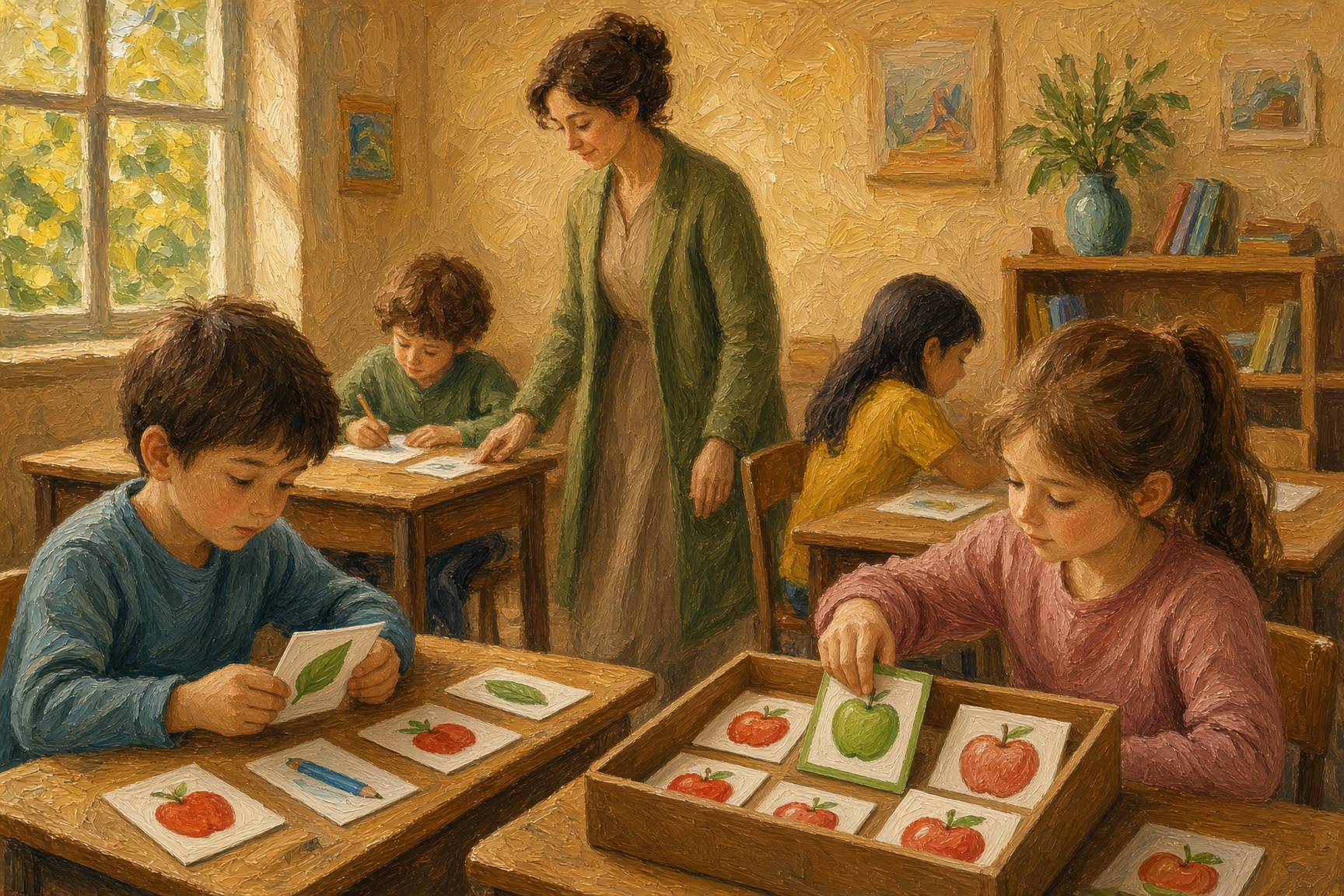
Children sort paper cards at a table. A laptop stays closed.

Last week the children sorted objects in the room. This week they sort 24 paper cards, or they use the school Intelligence Sorter if you have it. That tool is the same card table on a school computer. It is not a public chatbot. They work with a partner, then sit in a circle. Each child writes an answer for the chatbot, the dog, and the thermostat, with one reason for each.

  • By Friday, each child has sorted a full set of cards at least once with a partner.
  • Each child has a written answer for the chatbot, the dog, and the thermostat. The reason does not use the word smart.
  • Each child has heard at least two classmates say why a chatbot that answers you is still not a person.
  • Day A: say the four words from memory. Sort the easy cards first. At the end, hold up the chatbot card. Do not sort it today.
  • Day B: pairs only. Three cards on each table: chatbot, dog, thermostat. Do not tell them which pile you would pick.
  • Day C: fifteen minutes in a circle, then the three answers written in silence. Those pages are the grade for this week.

If this starts happening

A child treats a chatbot like a classmate. A pair uses “it sounds nice” as their only reason. Someone wants to open a home speaker to settle the argument. Say: “We do not open a chatbot to win an argument. Write what it can do and what it cannot do.”

Compass · Grade 4 · Weeks 1–10 · People, tools, and guesses

Teacher · Week 2 · The 24 cards

Use paper cards if you do not have the tool.

Cut this list into 24 slips, or write each name on an index card. Children sort them into the same four piles. If you have Intelligence Sorter, they may use that instead. Keep this list for a dead battery. They may not open a public chatbot next to it.

  • Usually living, 5 cards: child, dog, goldfish, beetle, oak tree.
  • Usually a tool, 5 cards: pencil, hammer, bicycle, spoon, calculator.
  • Usually neither, 3 cards: rock, cloud, puddle.
  • Expect an argument, 11 cards: plant, book, stuffed animal, map, camera, robot vacuum, thermostat, search box, voice speaker, chatbot, school laptop.

How the tool fits

Intelligence Sorter has 24 cards, a box for a reason, and a class list of the cards people disagree on. It teaches that sounding like a person is not the same as being a person. Keep last week’s wall chart up. A pair must look at the thermostat and the dog before they may touch the chatbot card.

Compass · Grade 4 · Weeks 1–10 · People, tools, and guesses

Teacher · Week 2 · Day A · 45 minutes

Easy cards first. The chatbot card is last.

0–6 min

Cover last week’s poster. Say: “Tell me the four things a mind does.” If they get stuck, uncover one word at a time. Then say: “Today you will sort 24 cards into the same four piles as last week.”

6–14 min

Show two cards with the whole class: pencil, then rock. On the board write the format they will copy: name, pile, because. Example: Pencil, tool, a person uses it to write and it does not care.

14–38 min

Pairs get a set. They must finish the easy living, tool, and neither cards before they may pick up the plant, the book, the thermostat, the dog, the speaker, or the chatbot. If a pair is stuck on the beetle, ask: “Does it notice anything? Does it care about you?”

38–45 min

Hold up the chatbot card. Do not sort it. Say: “This is tomorrow. Tonight, notice if anything at home talks to you. Do not type anything into it for this class.”

Say this out loud

Guessing the pile is not the work. You have to write a reason. If you cannot say why, leave the card in the middle of the table.

If this starts happening

A pair finishes in eight minutes because they put every card in the tool pile. Sit with them. Take the dog card back out. Ask the three questions from Day B. They redo those three before they may go on.

Compass · Grade 4 · Weeks 1–10 · People, tools, and guesses

Teacher · Week 2 · Day B · 45 minutes

Three cards. Pairs only.

A dog sits near a child. An open book is on a desk.

Put only three cards on every pair table: chatbot, dog, thermostat. Hide the rest of the deck. Today is only these three.

0–5 min

Each pair reads the three names out loud. No sorting yet.

5–18 min

Dog first. Two minutes of talk, then one written reason. Then the thermostat. Then the chatbot. The chatbot is last on purpose, so they have practice before the hard one.

18–38 min

Visit every pair. Ask the three questions below. Write nothing for them. Do not say which pile you would pick.

38–45 min

Two pairs swap papers and read each other’s reasons. They may add a question in the margin. They may not change the other pair’s pile.

Carry this card in your pocket

1. Does it notice you, or does it only react because a person set it up that way? 2. Does it care what happens to you if you leave the room? 3. If it talks, who wrote the words it uses?

If this starts happening

“It said hello, so it is a friend.” Stop and ask question 2. “The thermostat knows the temperature.” Ask: “Knows, or measures? Who decided the number on the wall?”

Compass · Grade 4 · Weeks 1–10 · People, tools, and guesses

Teacher · Week 2 · Day C · 45 minutes

Sit in a circle. Then write. Then talk with no notes.

Children sit in a circle. One child holds a pencil. The teacher sits with them.

Chairs or a rug. You sit in the circle, not in a teacher chair above it. One talking piece. A pencil is fine. Only the person holding it talks.

0–15 min

Three rounds, five minutes each: dog, then thermostat, then chatbot. Say: “Pass the pencil. Give one reason. You may pass.” Do not summarize at the end of a round. Start the next name.

15–32 min

Back to desks. Quiet. Each child writes three answers on the student page. One reason each. They may not copy a neighbor. You collect these pages. This is the week’s work.

32–40 min

Notebooks closed. Phones and tablets put away for two minutes. The sentence is: “A chatbot that answers you is not a person.” One child says it in their own words. A partner answers. Listen for a reason, not for who is loudest.

40–45 min

As children leave, ask each one to name one card they changed their mind about, or to say “I did not change.” Either answer is fine if they give a reason.

If this starts happening

A child gets upset because a classmate said the dog is just a tool. Stop the circle. Say: “People love dogs. That is not the question. The question is what the dog can do. We will come back.” Then come back.

Compass · Grade 4 · Weeks 1–10 · People, tools, and guesses

Teacher · Week 2 · What finished work looks like

Collect the three answers. Read the reasons.

A finished page has three names, three piles, and three reasons. A reason that only says “because it is smart” comes back with a note: “Say what it can or cannot do.”

A good reason for the dog sounds like this: it is living. It notices when I pick up a leash. It cares if I leave. A good reason for the thermostat: it is a tool. It measures heat. A person chose the number. It does not care if I am cold. A good reason for the chatbot: it is a tool that talks. It answers with words someone trained it on. It does not notice me if the power is off.

  • Send it back if the child writes “The computer is alive because it talks.” Talking is not what we are checking.
  • Send a blank reason back. Sit with the child, ask the three pocket questions, and then they write.
  • Send back a pile copied from a partner with no reason of their own.
  • If a child says “It said my name. It is my friend,” you say: “Who typed your name into it the first time? Does it miss you when you leave?”
  • If a child says “The dog is a tool because we use it,” you say: “Can a hammer notice you? Can this dog? Use both piles if you need to, but write why.”
  • If a child says “Let’s just search it,” you say: “Not for this. The reason has to come from you.”

Next week

Next week is a short history of tools: clay tokens, the book, the telephone, the search box, and a chatbot. Each card gets one good thing and one problem. Keep this week’s answers. The children will need them.

Compass · Grade 4 · Weeks 1–10 · People, tools, and guesses

Student · Week 2

Same four piles as last week. This week you sort cards.

You and a partner will sort 24 cards. Do the easy ones first. Then do three that people usually disagree on: a dog, a thermostat, and a chatbot. Write a reason for each card. A pile name by itself does not count.

What you will make

Three written answers, one each for the chatbot, the dog, and the thermostat, with a reason for each. Your teacher will collect that page.

NAME

DATE

The rule for this week

Do not use the word smart as a reason. Write what the thing can do, or what it cannot do. Do not open a chatbot to settle an argument.

Compass · Grade 4 · Weeks 1–10 · People, tools, and guesses

Student · Week 2 · Easy cards first

Write the pile and a short reason.

Pencil

living · tool · both · neither

because

Rock

living · tool · both · neither

because

Goldfish

living · tool · both · neither

because

Bicycle

living · tool · both · neither

because

Cloud

living · tool · both · neither

because

Beetle

living · tool · both · neither

because

Rule

Do not touch the chatbot card until your teacher says so. Finish the easy cards first. If you and your partner disagree, write both reasons and wait.

Compass · Grade 4 · Weeks 1–10 · People, tools, and guesses

Student · Week 2 · More easy cards

Keep going. Use the same four piles.

Child

living · tool · both · neither

because

Hammer

living · tool · both · neither

because

Oak tree

living · tool · both · neither

because

Spoon

living · tool · both · neither

because

Puddle

living · tool · both · neither

because

Calculator

living · tool · both · neither

because

A reason that counts

“Goldfish — living — it notices food and swims toward it.” That counts. “Goldfish — living — because it is smart.” That does not. Cross out smart and try again.

Compass · Grade 4 · Weeks 1–10 · People, tools, and guesses

Student · Week 2 · Three answers

One reason each. Do not use the word smart.

Your teacher will collect this page. Point at what the thing can or cannot do.

Dog

Circle one: living · tool · both · neither

My reason:

Thermostat

Circle one: living · tool · both · neither

My reason:

Chatbot, a talking computer

Circle one: living · tool · both · neither

My reason:

Compass · Grade 4 · Weeks 1–10 · People, tools, and guesses

Student · Week 2 · Circle

Listen to the other students. Then write what you still think.

When you hold the pencil, give one reason. You may pass. You may not talk over someone. You may not use the word smart.

One case I changed my mind about, or “I did not change,” and why.

Copy this in your own hand

A chatbot that answers you is not a person.

Notes closed for two minutes. Say that sentence in your own words. Your partner answers you. A person is listening, not a screen.

Compass · Grade 4 · Weeks 1–10 · People, tools, and guesses

Teacher · Week 3 · A short history of tools

Every tool made something easier, and every tool caused a problem.

Clay tokens, an old book, a telephone, and a closed laptop on a wooden table.

This week students make five cards: clay tokens, the book, the telephone, the search box, and a chatbot. Each card names one thing the tool made easier and one problem it caused. The cards are saved for the museum at the end of the year. A card with only the good part is not finished.

  • Day A: clay tokens and the book. Students say what people did before each one, what got easier, and what went wrong.
  • Day B: the telephone, the search box, and the chatbot. Same two lines on every card.
  • Day C: pairs check that every card has a problem. If the problem line is blank, the card goes back. No public chatbot.

If this starts happening

Students write only “it helped people.” Ask: “Who had a harder time because of this tool?” A book is easier to carry than a stack of clay, and it can also spread a false story. A telephone lets you hear a far-away voice, and it can also ring when you are trying to sleep or think. A search box finds a page fast, and it can also put a false page first. A chatbot answers in sentences, and it can sound sure when it is wrong.

Compass · Grade 4 · Weeks 1–10 · People, tools, and guesses

Teacher · Week 3 · Day A · 45 minutes

Start with the oldest tools on the table.

0–8 min

Put clay tokens, or a picture of them, and a book on the table. Ask: “What job was a person trying to do?” Write their words. Do not correct them yet.

8–20 min

Tell the short history in plain words. People used clay tokens to keep a record of grain and animals, because memory failed. A book let one person’s words travel without that person being in the room. Then stop talking.

20–40 min

Each child writes the two cards. One thing it made easier. One problem. Walk around. If the problem line says “nothing,” sit down and ask for a person who was left out or a mistake the tool could spread.

40–45 min

Two children read one problem out loud. Do not vote on which tool was better.

Say this out loud, then stop

A tool is something a person made to do a job. It can make the job easier. It can also cause a new problem. Today we write both. We do not pick a favorite tool.

Compass · Grade 4 · Weeks 1–10 · People, tools, and guesses

Teacher · Week 3 · Day B · 45 minutes

The telephone, the search box, and the chatbot.

0–8 min

Ask the class to name one problem from yesterday’s book card, without looking. If they cannot, uncover one card and try again.

8–18 min

Telephone: a person can talk to someone who is not in the room. Problem: the person on the other end cannot see what you see, and a stranger can call. Search box: it looks through many pages. Problem: the first page is not always the true page. Chatbot: it answers in sentences. Problem: a smooth sentence can still be false, and it does not care about you.

18–40 min

Children write the three cards. You walk. A problem that only says “it is bad” goes back. They have to name what goes wrong.

40–45 min

Collect the five cards in a folder with the child’s name on the outside, not typed into any tool. The folder waits for the museum.

If this starts happening

A child wants to open a chatbot to ask it for the history. Say: “Not today. The card has to come from what we just said in this room, and from the book on the table.”

Compass · Grade 4 · Weeks 1–10 · People, tools, and guesses

Teacher · Week 3 · Day C · 45 minutes

Check that every card has a problem.

0–10 min

Pairs swap folders. The partner’s only job is to find a card with no real problem. They put a small dot on it. They do not rewrite it.

10–30 min

Each child fixes their own dotted cards. You listen for a problem that names a person, a mistake, or a limit.

30–40 min

Phones in the basket. Each child copies one sentence: “A tool can help, and it can still cause a problem.”

40–45 min

They tell a partner one problem from the chatbot card, with the folder closed.

How to score

Five cards, each with an easier line and a problem line, is finished. A card that praises the tool and skips the problem is not. Do not grade handwriting. Grade whether both lines are about the tool, not about a vague feeling.

Compass · Grade 4 · Weeks 1–10 · People, tools, and guesses

Student · Week 3

Write what the tool made easier, and one problem.

Old and newer tools on a table.

A tool helps a person do a job. It can also cause a problem. You will make five cards. Both lines have to be filled in. Do not ask a chatbot to write the cards.

NAME

DATE

Clay tokens

One thing this made easier:

One problem it caused:

The book

One thing this made easier:

One problem it caused:

The telephone

One thing this made easier:

One problem it caused:

Compass · Grade 4 · Weeks 1–10 · People, tools, and guesses

Student · Week 3 · Two more cards

The search box and the chatbot still need a problem.

Search box

One thing this made easier:

One problem it caused:

Chatbot

One thing this made easier:

One problem it caused:

Check

If a line says “nothing bad,” cross it out. Name a person who could be confused, left out, or tricked.

Copy this: A tool can help, and it can still cause a problem.

Compass · Grade 4 · Weeks 1–10 · People, tools, and guesses

Teacher · Week 4 · Map your own mind

The map has to come from this week, not from a list a machine wrote.

A child draws pictures of things from their own week.

Students draw or write five things they did with their own mind this week. They do not ask a chatbot for a list of things people can do. If a sentence could belong to any child in any school, send it back. The map is the project for this unit.

  • Day A: look back at notice, remember, choose, and care. Each child picks real moments from this week.
  • Day B: add one job a tool did, and draw a line that shows the tool did not do the choosing.
  • Day C: a partner asks “Did this happen to you?” If the child cannot point to a day, the box is rewritten.

If this starts happening

A child writes “I am creative” or “humans have emotions” with no event. Ask: “What did you notice on Tuesday? What did you choose at lunch? Who did you care about yesterday?” Stay with the event.

Compass · Grade 4 · Weeks 1–10 · People, tools, and guesses

Teacher · Week 4 · Day A · 45 minutes

Start from something that happened.

0–8 min

Ask four children, one each: something you noticed, something you remembered without looking it up, a choice, and someone you care about. Write the events, not the big words.

8–15 min

Say: “A chatbot can make a list of nice sentences about minds. That list is not your week. Your map may use only things you did.”

15–40 min

Children fill four boxes. You walk. If a box is empty, ask one question and wait. Do not fill it for them.

40–45 min

They read one box to a partner. The partner asks: “When did that happen?”

Say this out loud, then stop

I do not want a poster about people in general. I want five things from your week. A machine was not there for those moments. You were.

Compass · Grade 4 · Weeks 1–10 · People, tools, and guesses

Teacher · Week 4 · Day B · 45 minutes

Add the tool, and show what it did not do.

0–10 min

Children add a fifth box: one job a tool did for them this week. A pencil, a calculator, a search box, or a chatbot at home all count. They write what the tool did.

10–30 min

Under that box they answer: “What did I still have to do?” A calculator can multiply. The child still has to know what the numbers are for. A chatbot can offer a sentence. The child still has to decide if it is true and if it is theirs.

30–45 min

They draw the map so a younger child could see which part was the person and which part was the tool. Pictures are allowed. No names of other children. No home addresses. No photos of classmates.

If this starts happening

A child wants to ask a chatbot “what should I put on my intelligence map?” Say: “Then the map would be the chatbot’s guess about a child, not a record of your week. Close it. Look at yesterday.”

Compass · Grade 4 · Weeks 1–10 · People, tools, and guesses

Teacher · Week 4 · Day C · 45 minutes

A partner checks that it happened.

0–20 min

Pairs. The listener points at one box and asks “When?” and “What did you do?” If the writer cannot answer, they rewrite that box before they move on.

20–35 min

Phones in the basket. Each child adds one sentence at the bottom: “This map is about my week. I did not ask a machine to write it.”

35–45 min

You collect the maps. You will give them back on Monday of Week 5 for the talks. Mark any map that has no real event. That child gets ten minutes on Monday to fix it before they speak.

How to score

A finished map has four events from the child’s week and one tool with a clear limit. A list of qualities, such as “smart, kind, creative,” is not a map yet.

Compass · Grade 4 · Weeks 1–10 · People, tools, and guesses

Student · Week 4

Make a map of your own week.

A child draws a map of their week.

Write things you did. Do not write a list that could belong to anybody. Do not ask a chatbot what to put here.

NAME

DATE

I noticed this. Say when.

I remembered this without looking it up. Say when.

I chose this, and I could have done something else.

I cared about this person or thing. Not a secret.

Compass · Grade 4 · Weeks 1–10 · People, tools, and guesses

Student · Week 4 · The tool

One job a tool did, and what it did not do.

A tool that helped me this week, and the job it did.

What I still had to do myself.

Copy this

This map is about my week. I did not ask a machine to write it.

My partner asked me when one of these happened. Here is what I said.

Compass · Grade 4 · Weeks 1–10 · People, tools, and guesses

Teacher · Week 5 · What a person can do

Each child talks for two minutes from their own map.

A child speaks to a small group beside a paper of drawings.

Families may listen. They do not have to. Classmates ask two questions: what can you do that a machine cannot, and what could go wrong if we treat the machine as a person? Clapping for a gadget is not the lesson. The lesson is the child’s explanation.

  • Day A: each child marks two boxes on the map they will say out loud. They write the two sentences they will start with.
  • Day B: half the class speaks. The other half asks the two questions and writes one thing they heard.
  • Day C: the rest speak. Then everyone writes one sentence they can still say with the map turned over.

If this starts happening

The class gets excited about a phone demo and never asks what can go wrong. Stop the demo. Ask the second question before anyone else may speak. Do not shame a child who uses a chatbot at home. Redirect them to the map.

Compass · Grade 4 · Weeks 1–10 · People, tools, and guesses

Teacher · Week 5 · Day A · 45 minutes

Prepare the talk from the map. Do not write a new speech.

0–10 min

Give the maps back. Children who had no real event get ten minutes and one question from you. Everyone else reads their own map in silence.

10–30 min

Each child stars two boxes and writes the first two sentences they will say. The sentences have to name an event. “I am very intelligent” does not count.

30–40 min

They practice once with a partner. The partner times two minutes. If they finish in twenty seconds, the partner asks “When?” and they try again.

40–45 min

Tell them families may come on Day C, and that nobody has to bring a family member. The talk is for the class either way.

Say this out loud

You will talk about your week, not about a machine’s week. Your classmates will ask what you can do that a machine cannot. They will also ask what could go wrong if we pretend the machine is a person.

Compass · Grade 4 · Weeks 1–10 · People, tools, and guesses

Teacher · Week 5 · Day B · 45 minutes

Half the class speaks. The other half listens for a reason.

0–5 min

Remind the listeners of the two questions. They may not shout a correction. They write one thing they heard.

5–40 min

Speakers go in a set order so nobody is left until the bell. Two minutes each. If a speaker only describes an app, ask: “What did you do?” Then let them finish the minute.

40–45 min

Listeners hand the speaker one written question, not a grade. You collect nothing yet.

Listening job

Write the event you heard, and write one thing the speaker can do that a chatbot cannot do for them.

Compass · Grade 4 · Weeks 1–10 · People, tools, and guesses

Teacher · Week 5 · Day C · 45 minutes

The rest of the class speaks. Then the map is turned over.

0–30 min

The remaining children speak. Families sit at the side if they came. They do not answer for the child.

30–40 min

Maps turned over. Phones in the basket. Each child writes one sentence they can still say: something a person in this room can do that a chatbot cannot.

40–45 min

Two volunteers read their sentence. You say what you heard. Do not rank the talks.

How to score

The talk is finished if the child names a real event from the map and answers both questions in some form, during the talk or in the written sentence. A clever demo with no event is not finished. Offer a second try the next morning, not a public redo if the child is upset.

Compass · Grade 4 · Weeks 1–10 · People, tools, and guesses

Student · Week 5

Get ready to talk about your map.

You will speak for two minutes. Use your map. Do not read a speech a chatbot wrote. Your classmates will ask two questions.

The two boxes I will talk about.

My first two sentences. They have to say what I did.

The two questions

What can you do that a machine cannot? What could go wrong if we treat the machine as a person?

Compass · Grade 4 · Weeks 1–10 · People, tools, and guesses

Student · Week 5 · After you listen

Write what you heard, then write with the map turned over.

One event I heard a classmate describe.

One thing that classmate can do that a chatbot cannot do for them.

My sentence with the map turned over. A person in this room can…

Compass · Grade 4 · Weeks 1–10 · People, tools, and guesses

Teacher · Week 6 · That’s a dog

Learning from many examples is not the same as understanding.

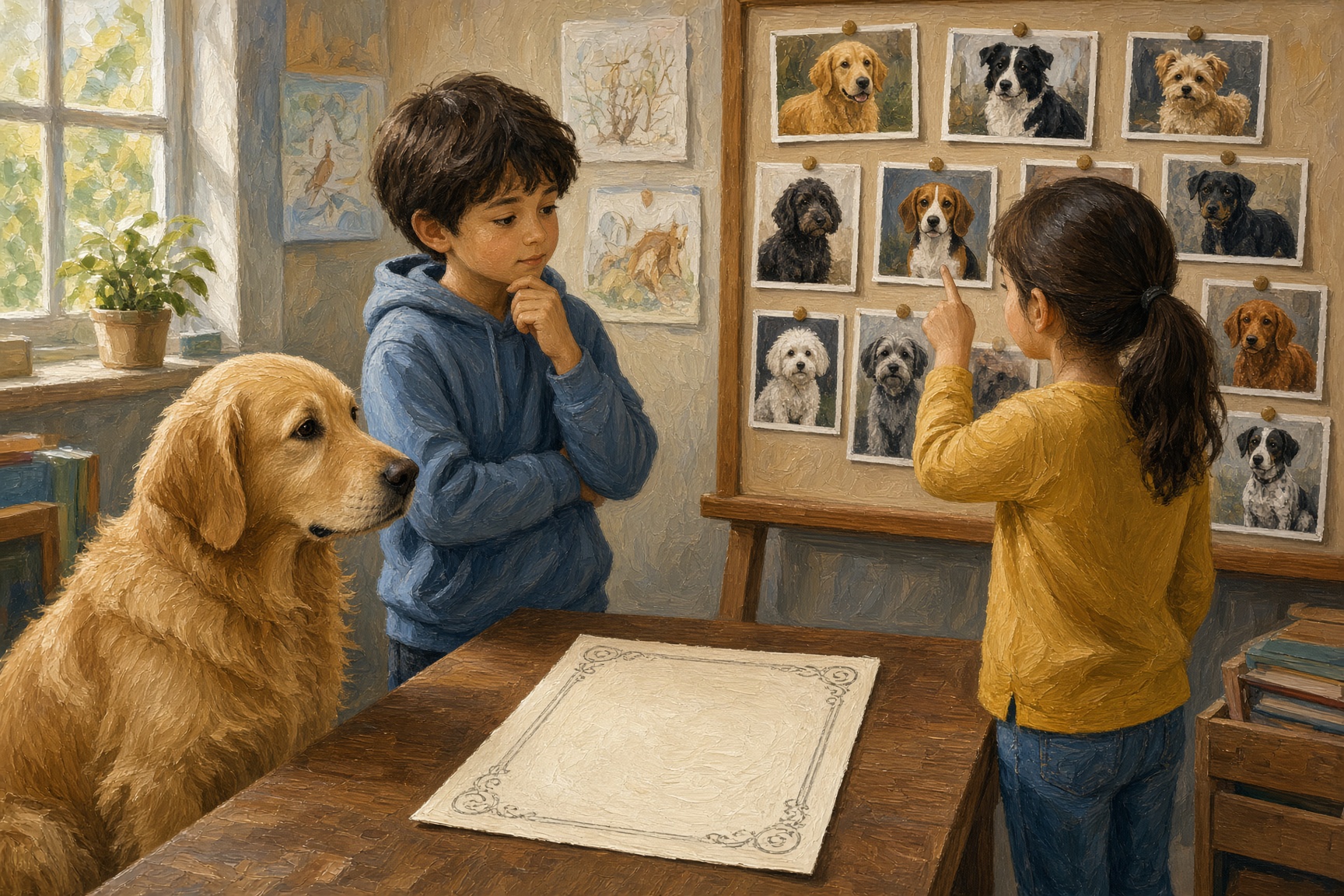
A child compares a dog with pictures of dogs.

People learn faces, songs, and “that’s a dog” by seeing many examples. A written rule is different. Someone can say the rule once, and another person can check it. Students make two lists. They should not walk out thinking that a pile of examples means the program understands.

  • Day A: how they learned a face, a song, and what a dog is. Then one classroom rule that was written down.
  • Day B: two lists on paper. Learned from examples. Learned from a written rule.
  • Day C: test a bad rule. “A dog is anything with four legs” also fits a table. Examples can be too few. A rule can be too wide. Neither one is understanding by itself.

If this starts happening

A child says “the computer understands dogs because it has seen a million of them.” Say: “It has been shown pictures and told a label. That is not the same as a dog mattering to it. We will test a picture it was not shown.”

Compass · Grade 4 · Weeks 1–10 · People, tools, and guesses

Teacher · Week 6 · Day A · 45 minutes

Examples first. Then one written rule.

0–10 min

Ask: “How did you learn your friend’s face? Did someone hand you a rule, or did you see them many times?” Take three answers. Then a song. Then “that’s a dog.”

10–20 min

Put a written classroom rule on the board, such as “pencils stay in the cup when we walk.” Ask how this way of learning is different. A new child can read it once. They do not need a hundred examples.

20–40 min

Children start the two lists. At least three items on each side, from their own life, not from a chatbot.

40–45 min

One pair reads one item from each list. You repeat the difference in one sentence and stop.

Say this out loud

Seeing many dogs can teach you to say “dog.” A written rule can be checked on the first try. A chatbot that learned from examples can still be wrong about a new picture. Seeing examples is not the same as understanding.

Compass · Grade 4 · Weeks 1–10 · People, tools, and guesses

Teacher · Week 6 · Day B · 45 minutes

Fill both lists. Do not let one side stay empty.

0–8 min

Cover yesterday’s board. Ask for one example and one rule from memory.

8–35 min

Children finish the page. You look for a list that only says “AI learns from data.” Send that back. Ask for a dog, a face, a song, a game, a recipe, or a classroom rule.

35–45 min

Pairs trade and point to one item that is on the wrong list. The writer may move it. They have to say why.

A useful pair

Examples: I know my dog’s bark because I have heard it. Rule: The fire drill paper says we walk, we do not run. Both can fail. The bark might be a different dog. The paper might be out of date. A person still has to check.

Compass · Grade 4 · Weeks 1–10 · People, tools, and guesses

Teacher · Week 6 · Day C · 45 minutes

Break a rule, and break a set of examples.

0–12 min

Write: “A dog is anything with four legs.” Ask what else fits. A table. A cat. The rule is too wide.

12–28 min

Then: “You have only seen small brown dogs.” Show a picture of a large white dog, or describe one. Ask if “that’s a dog” still works. Examples can be too narrow.

28–40 min

Children write both failures on the student page, in their own words.

40–45 min

Say what next week is: they will train a small sorting program, on paper if the school tool is not ready, using examples they choose.

How to score

Both lists have real items, and the child can say one way a rule fails and one way a thin set of examples fails. That is finished for this week.

Compass · Grade 4 · Weeks 1–10 · People, tools, and guesses

Student · Week 6

Two ways of learning.

Some things you learned by seeing or hearing them many times. Some things you learned because someone wrote a rule. Write real ones from your life.

NAME

DATE

Learned from examples. A face, a song, a dog, a game.

Learned from a written rule. A classroom rule, a recipe, a sign.

Compass · Grade 4 · Weeks 1–10 · People, tools, and guesses

Student · Week 6 · Where each one fails

A rule can be too wide. Examples can be too few.

“A dog is anything with four legs.” What else fits that is not a dog?

You have only seen small brown dogs. What might you get wrong?

Remember

Learning from examples is not the same as understanding. A program can sort pictures it was shown and still not know what a dog is.

Compass · Grade 4 · Weeks 1–10 · People, tools, and guesses

Teacher · Week 7 · Train the sorting program

The class chooses the examples. Then they test one new card.

Children sort red circles and blue squares into two boxes. A green triangle sits apart.

Students train Pattern Pupil if the school program is ready. If it is not, you are the program. You may only “know” the cards on the table. You do not use your own knowledge when they test you. They choose the examples. They test a card the program has not seen. One lucky right answer does not mean it understands.

  • Day A: pick a simple sort. Red circles in one box, blue squares in the other. Write the rule the class thinks it is learning.
  • Day B: show ten examples. Then test three new cards, including one the examples did not prepare them for.
  • Day C: write how many were right, and write what the program was actually using. Color, shape, or both.

If this starts happening

The class cheers one right answer and wants to stop. Say: “One right card can be luck. We need to say what it was using, and we need a card that should trick it.”

Compass · Grade 4 · Weeks 1–10 · People, tools, and guesses

Teacher · Week 7 · Day A · 45 minutes

Choose the examples before anyone tests.

0–10 min

Show two cards: a red circle and a blue square. Ask what is different. Color and shape are both different. That matters tomorrow.

10–20 min

The class votes on the training set: only red circles and blue squares. Write the list on the board so nobody can sneak in a new kind of card.

20–40 min

Each pair makes six training cards on paper slips. They label the back “red circle” or “blue square.” The front is the drawing.

40–45 min

They write one sentence: “If it has only seen these, a new card may fool it.”

Say this out loud

We are not asking a big chatbot to be clever. We are teaching a small sorter with the cards we made. It can only use what we show it. Tomorrow we will try to trick it.

Compass · Grade 4 · Weeks 1–10 · People, tools, and guesses

Teacher · Week 7 · Day B · 45 minutes

Train it. Then test a card it has not seen.

0–15 min

If Pattern Pupil is on the school computer, pairs enter their six cards. If not, a child plays the program and may look only at the training pile.

15–35 min

Test three cards the sorter has not been shown: a red square, a blue circle, and a green triangle. Record what it did. Do not help it by whispering the answer.

35–45 min

Pairs write which test it got right and which it missed. They do not change the training set today.

What you are watching for

If every training card that is red is also a circle, the sorter may be using color, or shape, or both. The red square and the blue circle tell you which. The green triangle should be hard. If the class calls that one “close enough,” send them back to write what is different about it.

Compass · Grade 4 · Weeks 1–10 · People, tools, and guesses

Teacher · Week 7 · Day C · 45 minutes

Write what it was actually using.

0–10 min

Each pair reads their score: how many of the three test cards it sorted the way they hoped.

10–30 min

They answer in sentences: Was it using color, shape, or both? How do you know? What card showed you?

30–40 min

Phones away. They explain the test to a new partner without the cards in their hands.

40–45 min

Tell them next week they will leave examples out on purpose, including a set that would be unfair to people who were not in the pictures.

How to score

A finished page has the training list, the three test results, and a sentence about what the sorter was using. “It is smart” is not a result. A perfect score with no sentence about why is not finished.

Compass · Grade 4 · Weeks 1–10 · People, tools, and guesses

Student · Week 7

Train a sorter with cards you made.

You choose the examples. The sorter only knows those cards. Do not use a public chatbot. If the school program is not here, a classmate may act as the sorter and may look only at your training cards.

NAME

DATE

Our training cards. Write what is on them.

Red square: what did the sorter do?

Blue circle: what did the sorter do?

Green triangle: what did the sorter do?

Compass · Grade 4 · Weeks 1–10 · People, tools, and guesses

Student · Week 7 · What was it using?

One right answer is not enough.

How many of the three test cards did it sort the way you hoped?

Was it using color, shape, or both? Which card showed you?

Remember

One lucky right answer does not mean the program understands. It used the examples you gave it.

Compass · Grade 4 · Weeks 1–10 · People, tools, and guesses

Teacher · Week 8 · Leave examples out on purpose

A narrow set of examples makes a bad guess.

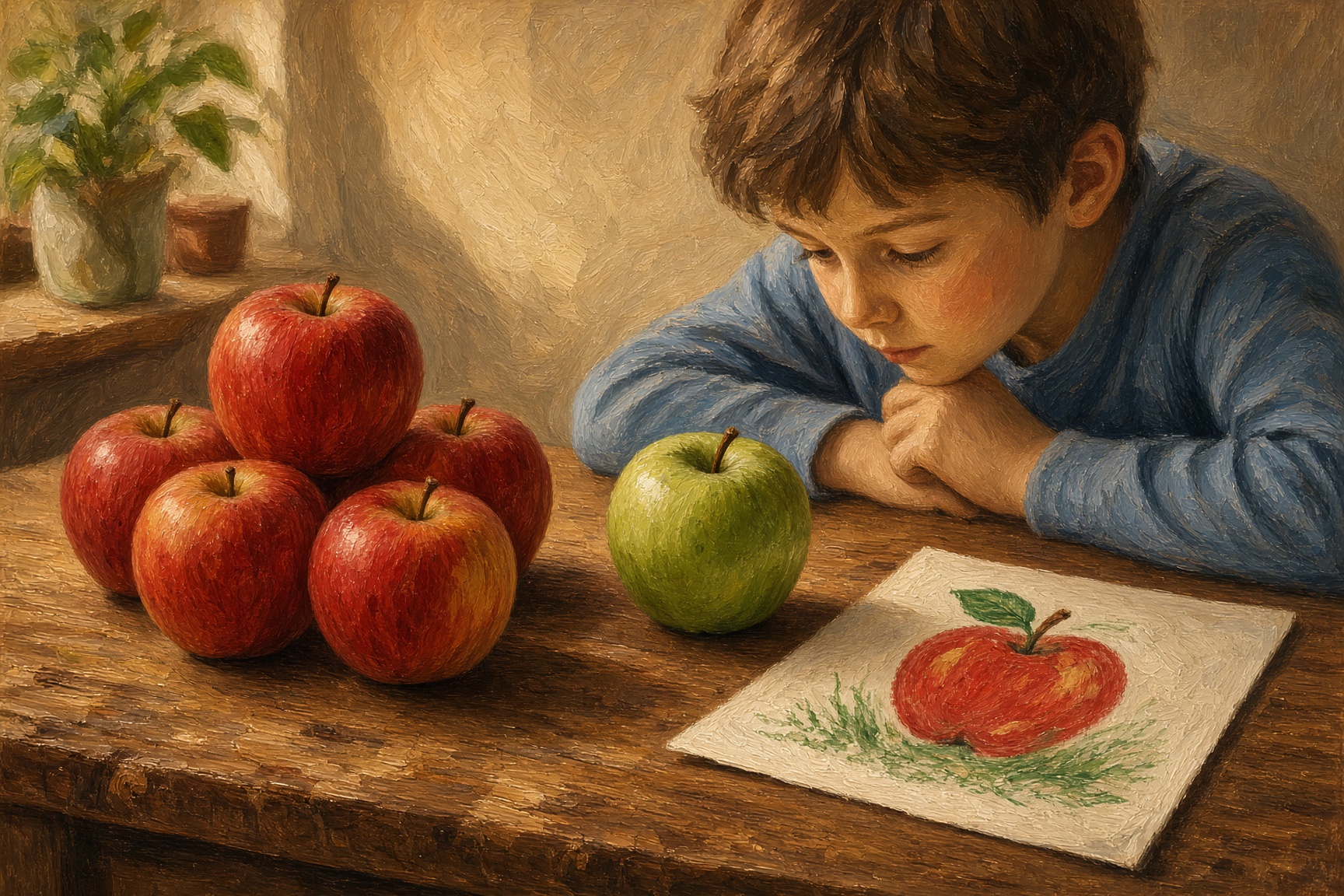
Red apples on a table, one green apple set apart, and a child’s drawing of an apple.

Students hide some examples on purpose. They watch the sorter fail on a green apple, a drawing of an apple, or the word apple. Then they do one people example in plain words: if the sorter only saw one kind of house, it may say another family’s house is not a house. That guess is unfair because of the pictures they left out, not because the house is wrong.

  • Day A: train only on red apples. Test a green apple, a drawing, and the written word. Log what failed.
  • Day B: the house example, with drawings the class makes. No photos of real students’ homes. No addresses.
  • Day C: each child writes what they hid, what the sorter did, and who could be treated unfairly by a guess like that.

If this starts happening

A child says the green apple “confused the computer.” Ask: “Did the apple do something wrong, or did we leave green out of the training pile?” Keep the blame on the set of examples.

Compass · Grade 4 · Weeks 1–10 · People, tools, and guesses

Teacher · Week 8 · Day A · 45 minutes

Show it only red apples. Then bring out the green one.

0–10 min

Pairs put six red-apple cards in the training pile. Say out loud what you are leaving out: green apples, drawings, and the word.

10–30 min

Test the three left-out cards. Write what the sorter did. If a child playing the sorter uses outside knowledge, stop them. They may only match what is in the pile.

30–45 min

They complete the failure log: what we hid, what it did, why that makes sense from the pile.

Say this out loud

We are making it fail on purpose. The failure belongs to the examples we chose. It does not mean apples are confusing.

Compass · Grade 4 · Weeks 1–10 · People, tools, and guesses

Teacher · Week 8 · Day B · 45 minutes

A thin set of pictures can treat people unfairly.

0–8 min

Read one apple failure from yesterday. Ask who left the green apple out. The answer is the class.

8–20 min

Drawings only. One table draws three houses that all look the same: same roof, same door. Another table draws a different kind of home: an apartment, a house on stilts, a narrow city house. Do not draw real addresses. Do not draw a classmate’s home.

20–40 min

The sorter trained only on the first three. It sees the other drawings. Children write what it would call “not a house,” and why that is unfair.

40–45 min

Say: “A bigger set can still leave people out. Next week you will make a poster about the failure you actually ran, not a poster a chatbot writes about AI.”

If this starts happening

A joke about someone’s real home. Stop it. Say: “We use made-up drawings. We do not use a classmate’s house, name, or photo.” Tear up any drawing that points at a real child and start that pair again with a made-up building.

Compass · Grade 4 · Weeks 1–10 · People, tools, and guesses

Teacher · Week 8 · Day C · 45 minutes

Write the log in sentences a parent could read.

0–25 min

Children finish the page: apples and houses. You reject “the computer is biased” if they cannot say which examples were missing.

25–38 min

Phones away. They tell a partner the apple failure without looking at the page.

38–45 min

Collect the logs. They are the notes for next week’s poster. A child who cannot say what was hidden is not ready to design the poster. Give them Monday’s first ten minutes to finish the log.

How to score

The log names what was hidden, what the sorter did, and one person or kind of home that a thin set of pictures could treat unfairly. Blaming “the computer” with no missing example is not finished.

Compass · Grade 4 · Weeks 1–10 · People, tools, and guesses

Student · Week 8

Leave some examples out. Write what happens.

You will show the sorter only red apples. Then you will test things you hid. Write what it does. The mistake comes from the pile, not from the apple.

NAME

DATE

What we put in the training pile.

Green apple: what did the sorter do?

A drawing of an apple: what did the sorter do?

The word apple, with no picture: what did the sorter do?

Compass · Grade 4 · Weeks 1–10 · People, tools, and guesses

Student · Week 8 · Houses

A thin set of pictures can leave people out.

Draw made-up houses. Do not draw a real classmate’s home. Do not write an address.

The three houses we trained it on. What did they have in common?

A different kind of home we left out. What did the sorter do with it?

Who could be treated unfairly if a program only knew one kind of house?

Compass · Grade 4 · Weeks 1–10 · People, tools, and guesses

Teacher · Week 9 · Show what broke

The poster comes from the experiment they ran.

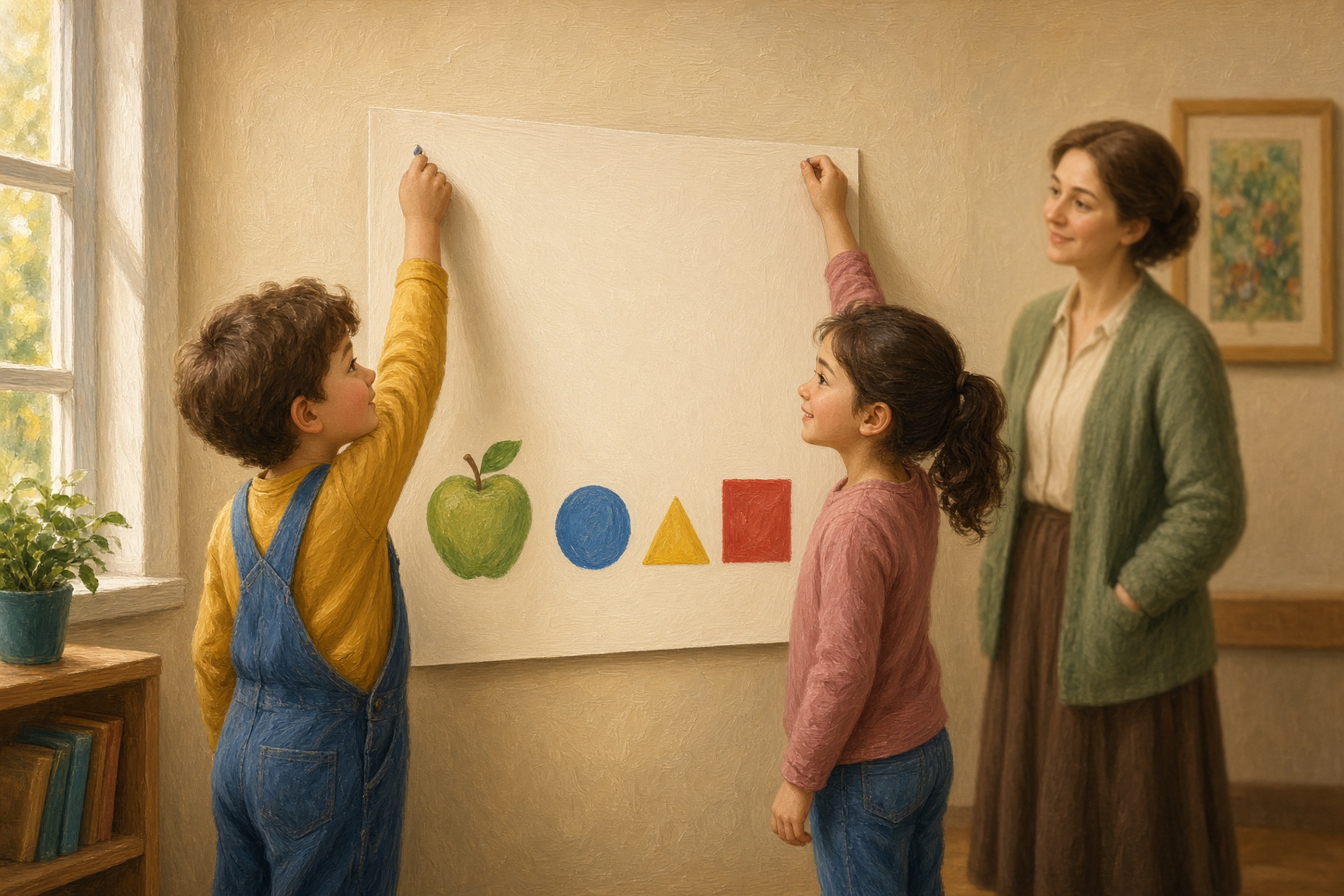
Two children pin up a poster with drawings of an apple and colored shapes.

Students design a poster from last week’s log. They do not ask a chatbot to explain AI for them. The poster has four parts: what we showed it, what it got wrong, why that happened, and what we would show it next. If they blame the computer and never mention the examples, the poster goes back.

  • Day A: turn the log into four boxes. Words a younger child could read.
  • Day B: draw the failed test on the poster. The green apple or the left-out house has to be visible.
  • Day C: a classmate tries to find the missing example. If they cannot find it, the poster is rewritten.

If this starts happening

A child asks a chatbot for “a poster about machine learning.” Say: “Then it would not be your experiment. Use the log. If the log is thin, fix the log first.”

Compass · Grade 4 · Weeks 1–10 · People, tools, and guesses

Teacher · Week 9 · Day A · 45 minutes

Four boxes. No new experiment yet.

0–10 min

Hand back the logs. Children read their own apple or house failure out loud to a partner in one sentence.

10–35 min

They draft the four boxes on the student page. You walk with a pencil and underline any sentence that does not point at an example.

35–45 min

They cross out any slogan, such as “AI is biased” or “computers are smart,” and replace it with the card they hid.

Say this out loud

The poster is a record of what you showed the sorter and what it got wrong. It is not a speech about computers in general.

Compass · Grade 4 · Weeks 1–10 · People, tools, and guesses

Teacher · Week 9 · Day B · 45 minutes

Put the failed test where a visitor can see it.

0–30 min

Children move the four boxes onto a large sheet. They draw the green apple, the word, or the left-out house. Words stay short.

30–45 min

You stand at the back of the room. If you cannot tell what was hidden, they add a label. The label has to name the missing example.

Plain words

“We only showed red apples. It would not count the green one.” That is a label. “Algorithmic limitation” is not. Send the long words back.

Compass · Grade 4 · Weeks 1–10 · People, tools, and guesses

Teacher · Week 9 · Day C · 45 minutes

A classmate hunts for the missing example.

0–25 min

Posters on desks. The visitor has one minute to point at what was left out. If they cannot, they say so, and the maker adds it before the next visitor.

25–40 min

Makers fix the poster. They do not start a new topic.

40–45 min

Tell them next week the class will rebuild the training set, test again, and name what still fails. A poster that claims the problem is solved is early. They have not rebuilt it yet.

How to score the draft

A visitor can find what was shown, what failed, why, and what should be added next. If any box is missing, it is still a draft.

Compass · Grade 4 · Weeks 1–10 · People, tools, and guesses

Student · Week 9

Plan the poster from your own test.

Use your log. Do not ask a chatbot to explain the lesson. Write so a younger student could read it.

NAME

DATE

What we showed it.

What it got wrong.

Why. Name the examples we left out.

What we should show it next.

Compass · Grade 4 · Weeks 1–10 · People, tools, and guesses

Student · Week 9 · After a classmate looks

If they cannot find the missing example, add it.

What my classmate found in one minute.

What I had to add so they could see the missing example.

Not done yet

Do not write “it is fixed.” You have not rebuilt the examples yet. That is next week.

Compass · Grade 4 · Weeks 1–10 · People, tools, and guesses

Teacher · Week 10 · Rebuild the examples

They test again, and they name what still fails.

Children test cards again after adding new examples to the pile.

The class looks at the broken sorters. Students add the examples they left out, test again, and write what still fails. There is no perfect set of examples. A page that says “it works now” with no remaining failure is not finished.

  • Day A: add the missing cards. Green apple, drawing, a second kind of house. Predict what will still fail before they test.
  • Day B: test. Write the new result and one thing that still fails.
  • Day C: finish the poster. A visitor checks that the remaining failure is still on it.

If this starts happening

A pair adds twenty random cards and says the problem is solved. Ask them to name one card it would still miss. If they cannot, they have not finished thinking. A drawing of an apple is still not a fruit you can eat. A word is still not a picture. A made-up house still does not include every home.

Compass · Grade 4 · Weeks 1–10 · People, tools, and guesses

Teacher · Week 10 · Day A · 45 minutes

Add the missing examples. Predict before you test.

0–10 min

Each pair reads last week’s “what we should show it next” box. That list is today’s training add-on. They may not invent a new project.

10–25 min

They make the new cards and add them to the pile. They write a prediction: “I think it will now get the green apple right, and it will still fail on the word apple.”

25–45 min

They do not test yet. Predictions are collected in the margin so they cannot change them after the test.

Say this out loud

Adding examples can fix the failure you planned for. It will not fix every failure. Write one thing you think will still go wrong. Then we will test.

Compass · Grade 4 · Weeks 1–10 · People, tools, and guesses

Teacher · Week 10 · Day B · 45 minutes

Test again. Keep the failure that remains.

0–25 min

Run the same tests as Week 8, plus one new card they did not add. Record right and wrong.

25–40 min

They compare the result with the prediction. If they were wrong about the prediction, they write that too. A wrong prediction is useful. Hiding it is not.

40–45 min

Each pair says one remaining failure out loud. You write three of them on the board. Do not erase them.

A remaining failure sounds like this

“It counts the green apple now. It still does not count the word apple, because a word is not a picture in our pile.” Or: “It accepts two kinds of houses. It would still reject a tent, because we never showed one.”

Compass · Grade 4 · Weeks 1–10 · People, tools, and guesses

Teacher · Week 10 · Day C · 45 minutes

Put the remaining failure on the poster.

0–25 min

Children add two lines to the poster: what we added, and what still fails. They cross out any sentence that says the sorter understands.

25–40 min

A visitor from another pair checks the poster. They must be able to point to the remaining failure. If they cannot, the line is rewritten.

40–45 min

You collect posters and logs. Tell them these stay in the folder for the museum later in the year. Next week, the course moves to writing clear instructions. They will not start that today.

How to score

The final poster shows the first failure, the examples they added, the new test, and one failure that remains. “It works now” with no remaining failure is not finished. There is no perfect set of examples. They still have to say what fails.

Compass · Grade 4 · Weeks 1–10 · People, tools, and guesses

Student · Week 10

Add the examples you left out. Predict first.

Write the prediction before you test. Do not change it after you see the result.

NAME

DATE

Cards we are adding to the pile.

I think it will get this right now.

I think it will still fail on this.

Compass · Grade 4 · Weeks 1–10 · People, tools, and guesses

Student · Week 10 · After the test

Write what changed, and what still fails.

What it got right after we added cards.

What still fails, and why.

Was my prediction right? What did I have wrong?

On the poster

There is no perfect set of examples. Do not write “it understands now.” Write what still fails.

Compass · Grade 4 · Weeks 1–10 · People, tools, and guesses

End of week 10 · Keep the posters

By the end of these ten weeks, a child should be able to do these without looking at the poster.

A child with a compass and a dog, in a room with a plant and a closed laptop.
  • Name notice, remember, choose, and care, and use them on a real object in the room.
  • Give one reason a thermostat is not a person, and one reason a chatbot is not a person.
  • Name one good thing an older tool did and one problem it caused.
  • Point to something they did this week that a machine did not do.
  • Say what examples a sorter was shown, what it got wrong, and what still fails after they add more examples.

Remember this

Just because a chatbot sounds like a person does not mean it is a person. Kind words are for people. Do not call something smart unless you can say what it can do. A program that learned from examples can still be wrong, and a thin set of examples can treat people unfairly.

Compass · Grade 4 · Weeks 1–10 · People, tools, and guesses